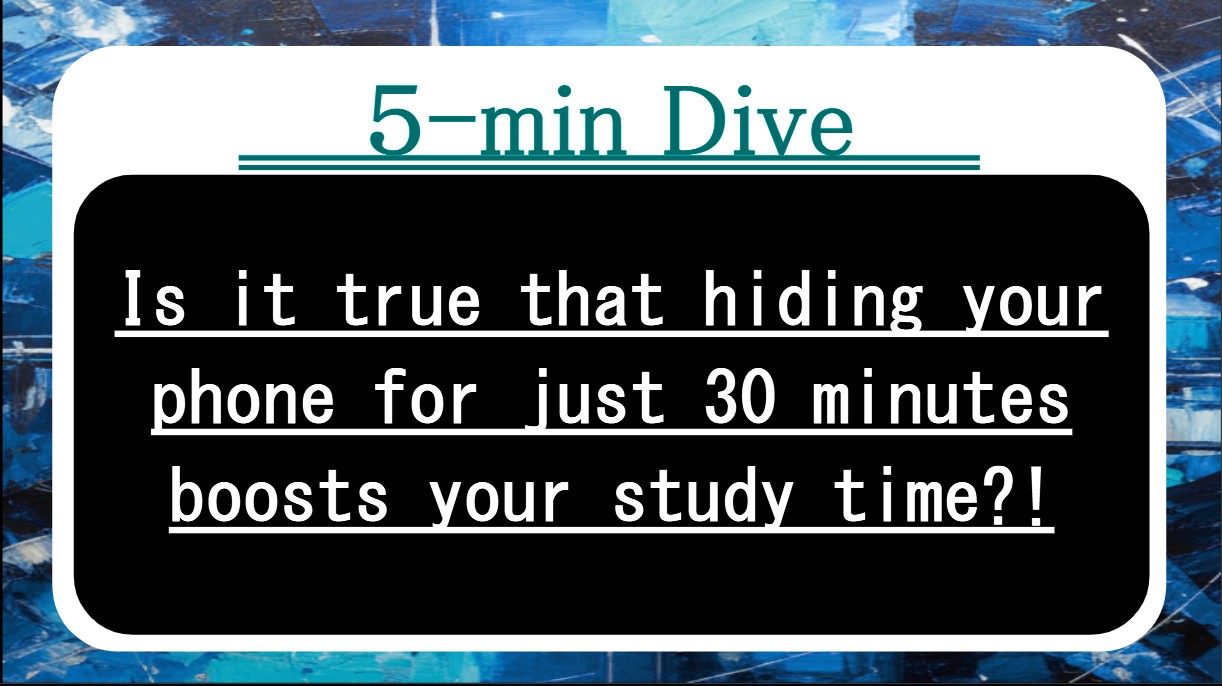
Got five minutes? This piece walks you through focus as a design problem—how 30-minute blocks, hidden cues, and tiny rewards can make starting work feel light instead of heavy.
Key terms in 30 seconds
Before we dive in, here are five keywords we’ll keep coming back to.
- Focus loop — a repeatable pattern (start, work, reward) that trains your brain to enter “study mode” on cue.
- 30-minute block — a small, fixed chunk of time that feels doable even on tired days, but long enough to matter.
- Cue hygiene — cleaning up your space so tempting objects (like your phone) don’t keep calling your attention.
- Reward hook — a tiny treat right after work that makes your brain want to repeat the behavior tomorrow.
- Streak line — a visible chain of finished blocks that feels too satisfying to break once it gets going.
1. What’s really going on here
Most of us blame ourselves for “weak willpower” when we can’t focus. But a lot of procrastination is simply bad design: tasks are vague, distractions are visible, and there’s no clear end point. In that setup, your brain is not lazy—it’s confused.
A more gentle way to work is to build a focus loop. You set a 30-minute block with a timer, pick a tiny starter action, hide your biggest distraction, and give yourself a small reward at the end. You’re not forcing yourself to be a different person; you’re changing the script so the first step feels easy and the finish line is always in sight.
Two things do most of the heavy lifting: cue hygiene and the reward hook. When your phone is out of sight, your brain has fewer reasons to wander. When the end of the block brings a song, a snack, or a quiet break, your brain quietly tags the whole experience as “safe” instead of “painful”. Over a few days, the streak line on your calendar turns this from a trick into a habit.
Put together, the message is simple: design beats discipline. Build small, well-defined loops that your brain can follow on low-energy days, and focus starts to feel like a setting you turn on—not a battle you have to win from scratch every time.
[Completely Free] Utility Tools & Work Support Tools
You can use practical tools like CSV formatting, PDF conversion, and ZIP renaming entirely in your browser, all for free. Each tool page clearly explains “How to use it”, “What the output looks like”, and “Important notes & caveats”, so even first-time users can start without confusion.
2. Quick checklist: Am I getting this right?
Use this as a five-point sanity check. If you can say “yes” to most of these, you’re on the right track.
- You decide the 30-minute block and subject before you sit down, not after you’ve opened your books or apps.
- You have a concrete starter task written (“copy one example”, “read five lines aloud”), not a vague goal like “study math”.
- Your phone and other big distractions are physically out of sight and out of reach, not just on silent next to your hand.
- You know exactly what your reward hook is for this block and you give it to yourself immediately after the timer ends.
- You keep a simple streak line—ticks on a calendar, blocks in a notebook, or a habit app—and look at it at least once a day.
3. Mini case: One short story
Mini case
Alex is convinced they “can’t focus” and scrolls their phone whenever homework feels heavy. Most evenings, they bounce between apps, feel guilty, and then try to “make up for it” with a late-night cram that just leaves them tired.
One week, Alex tries a new setup: every weekday at 7:30 pm, they run one 30-minute block at the same desk. Phone in airplane mode goes into a box on a high shelf (simple cue hygiene), the starter task is “copy one example problem”, and the reward is one episode of a favorite short show. Each finished block earns a small square on a paper calendar on the wall.
By day three, starting feels less dramatic—Alex knows it’s “just 30 minutes” and that the reward is waiting. By the end of the week, the streak line on the calendar is five squares long, and missing a day suddenly feels more strange than doing the block. Nothing about Alex’s personality changed; the environment and loop did.
4. FAQ: Things people usually ask
Q. What if I break my streak or miss a day?
A. Treat streaks as guides, not judges. When you miss a day, simply circle that gap and write one word about why (“late”, “travel”, “headache”). Then restart the very next day with one 30-minute block. The important part is how fast you come back, not how perfect the chain looks.
Q. Can I use my phone as the timer if I put it face down?
A. You can, but it’s riskier. If you must use your phone, set the timer, turn on airplane mode, and put it across the room where you can hear it but not touch it. A cheap kitchen timer or a simple online timer on a separate device is usually better—it keeps the tool and the temptation separated by default.
Q. Is 30 minutes the “best” length, or can I change it?
A. Thirty minutes works well for many people because it’s short enough to feel safe and long enough to matter. But the real rule is: pick a length you can keep on your worst day. If that’s 15 minutes right now, start there and build up later. The loop—timebox, cues, reward—is more important than the exact number.
5. Wrap-up: What to take with you
If you only remember a few lines from this article, let it be these:
Focus isn’t a personality trait; it’s a design choice. A simple focus loop—one 30-minute block, clean cues, and a tiny reward—can make starting feel light enough that you actually do it, even when you’re tired or stressed. Once the loop is in place, your brain learns “this is safe and short”, and resistance drops.
You don’t need to overhaul your entire schedule. Start with one block a day, protect it gently, and let the streak line grow. Over time, those small, well-designed sessions add up to real progress in grades, projects, or any skill you care about.
- Design a daily focus loop: timebox 30 minutes, define a starter task, and set a visible timer.
- Practice cue hygiene: remove your phone and other triggers from your desk before each block.
- End with a tiny reward and mark your streak so tomorrow’s start feels easier than skipping.